5 Jun 2026
Desertaspen represents a distinctive tree variety adapted to arid conditions while retaining the graceful form associated with traditional aspens. This evergreen resource provides practical details on its traits and requirements for those interested in arid landscaping or natural history.
Core Characteristics of Desertaspen
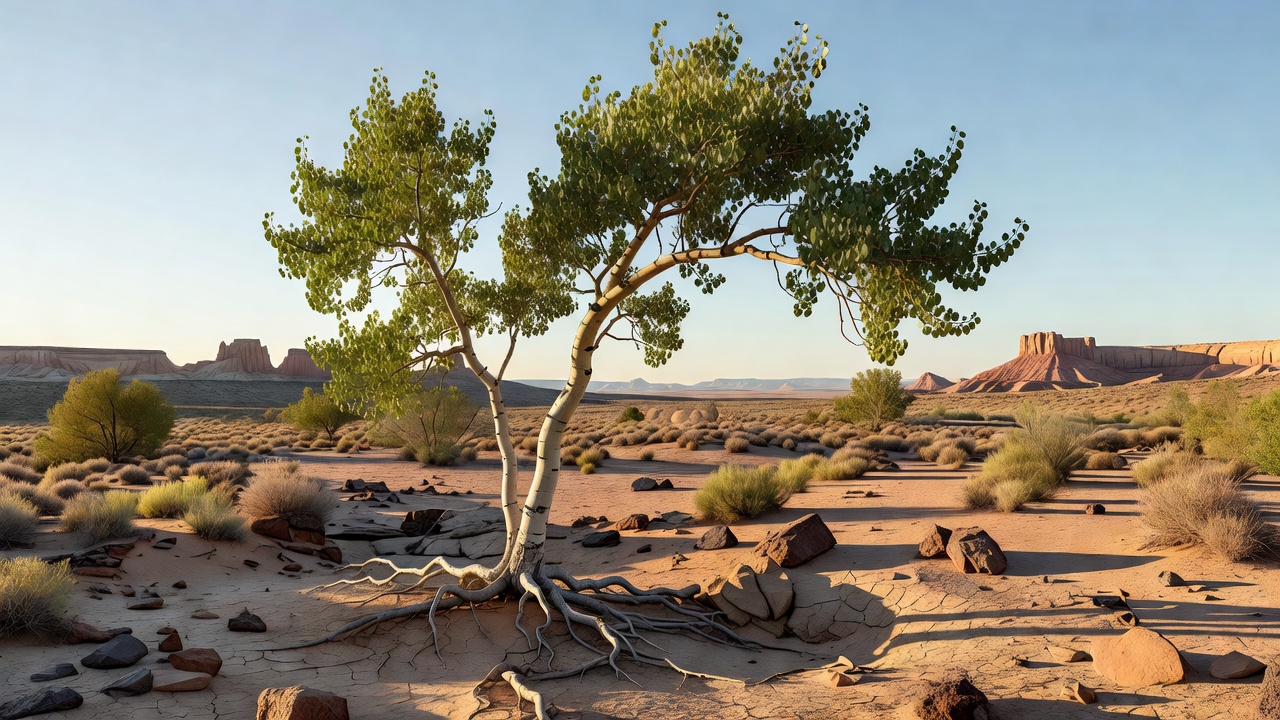
Desertaspen typically reaches heights of 20 to 40 feet with a slender trunk and smooth pale bark that develops subtle fissures over time. Its leaves are smaller and more leathery than standard aspens, featuring a muted green hue that helps reduce water loss. In autumn the foliage shifts to soft yellow tones before dropping. The root system spreads widely to capture scarce moisture, allowing the tree to thrive where rainfall is limited. These adaptations make Desertaspen suitable for regions with hot days and cool nights.
Growth occurs steadily once established, though young specimens benefit from protection against intense sun. The tree produces catkins in early spring that support local pollinators. Wood from mature Desertaspen is light yet durable, occasionally used in small crafts or as fuel in dry climates.
Natural Habitat and Distribution
Desertaspen occurs naturally in transitional zones between desert flats and higher plateaus where soil drains quickly. It favors sandy or rocky substrates with minimal organic content. Populations appear in scattered clusters across the southwestern United States and northern Mexico. These stands often mark areas with seasonal underground water sources. Elevation ranges from 3,000 to 6,000 feet, where temperature swings support dormancy cycles. Competition from invasive grasses can limit spread, so native stands remain localized.
Wild specimens demonstrate resilience to drought through deep taproots and reflective leaf surfaces. Observers note that Desertaspen often grows alongside drought-tolerant shrubs such as sagebrush or saltbush, forming sparse but stable communities.
Practical Cultivation Guidelines
Successful planting begins with selecting well-drained sites that receive full morning sun and light afternoon shade. Soil amendments should focus on improving drainage rather than fertility; excessive nutrients encourage weak growth. Watering schedules start frequent for the first two seasons then taper to monthly deep soakings. Mulch layers of gravel or wood chips help retain moisture and moderate soil temperature.
Pruning occurs in late winter to remove damaged branches and maintain shape. Pests remain few, though occasional monitoring for aphids or scale is advisable. Propagation uses root cuttings or nursery stock selected for local climate tolerance. Once mature, Desertaspen requires little intervention and contributes shade, seasonal color, and habitat value to dry gardens.
Long-term plantings demonstrate that Desertaspen integrates effectively into xeriscape designs when spaced to accommodate root expansion. Regular observation of leaf color and soil moisture provides the best indicators of health in these settings.